
Note: Reproduction and secondary use permitted with proper source attribution.
The Idea of Adding the Pigment Naturally Found in Hair.
Gray Hair Care Made Possible by Harnessing the Properties of Melanin.
Want to Bring Gray Hair Closer to Its Natural Appearance, with Less Damage
The challenge: how to add "melanin"—the pigment naturally present in hair—to gray hair. After years of research, a “melanin precursor” was developed, inspired by a phenomenon observed in sake brewing, where koji (fermented rice with Aspergillus oryzae) turns black.The melanin precursor deposits within the cuticle layers, where it forms a dark pigment that gives hair natural-looking color and shine.
Gray hair care born from the idea of adding the pigment naturally found in hair.
Here we explore its mechanism, properties, and the story of how it came to be.
*This article is about Kao's hair-dyeing technology.
INDEX
- Melanin Determines Hair Color. Gray Hair Is Hair That Has Lost Its Melanin
- Large Particles, Insoluble in Water… The Hidden Potential in Melanin's Difficult Nature
- The Development Key Behind Naturally Derived "Melanin Precursor"
- Long-Lasting Color, Body and Resilience: Made Possible by "Melanin Precursor" Deposition
Melanin Determines Hair Color. Gray Hair Is Hair That Has Lost Its Melanin
Hair color varies from person to person. Black, brown, reddish—and even within one person, as the years pass, strands of white hair may begin to mix in.
But why does hair color differ in the first place?
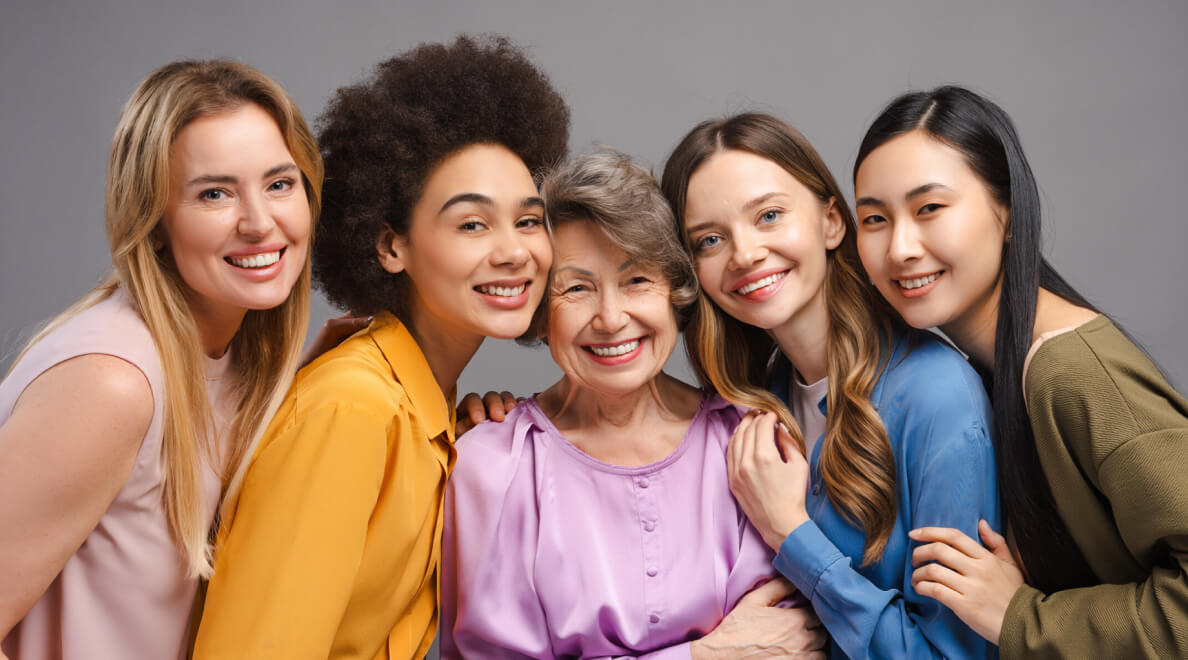
Because the type and amount of the pigment "melanin" differ.
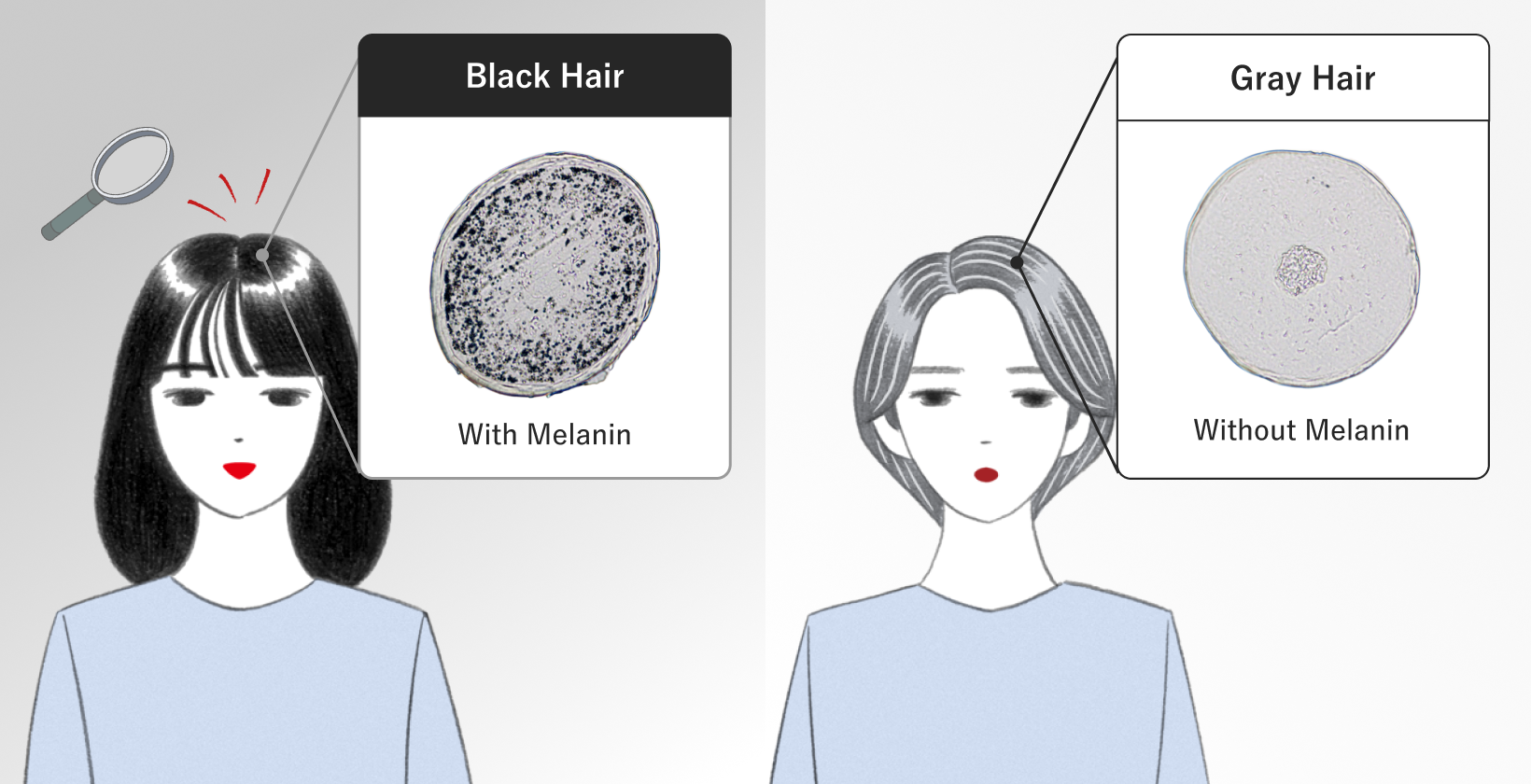
Melanin is the natural pigment that gives hair its color, and it comes in two types: black eumelanin and reddish-brown pheomelanin. More eumelanin produces black hair; more pheomelanin, red hair. And the more total melanin, the darker the hair color; the less, the lighter.
And gray hair is hair where this total amount of melanin has decreased. When melanin stops being produced, hair pigment is lost, and gray hair grows in its place.
Large Particles, Insoluble in Water…
The Hidden Potential in Melanin's Difficult Nature
Gray hair is, in essence, the state in which hair has lost its melanin. That being the case, by adding hair's natural melanin, we should be able to give it properties similar to those it had before turning gray.
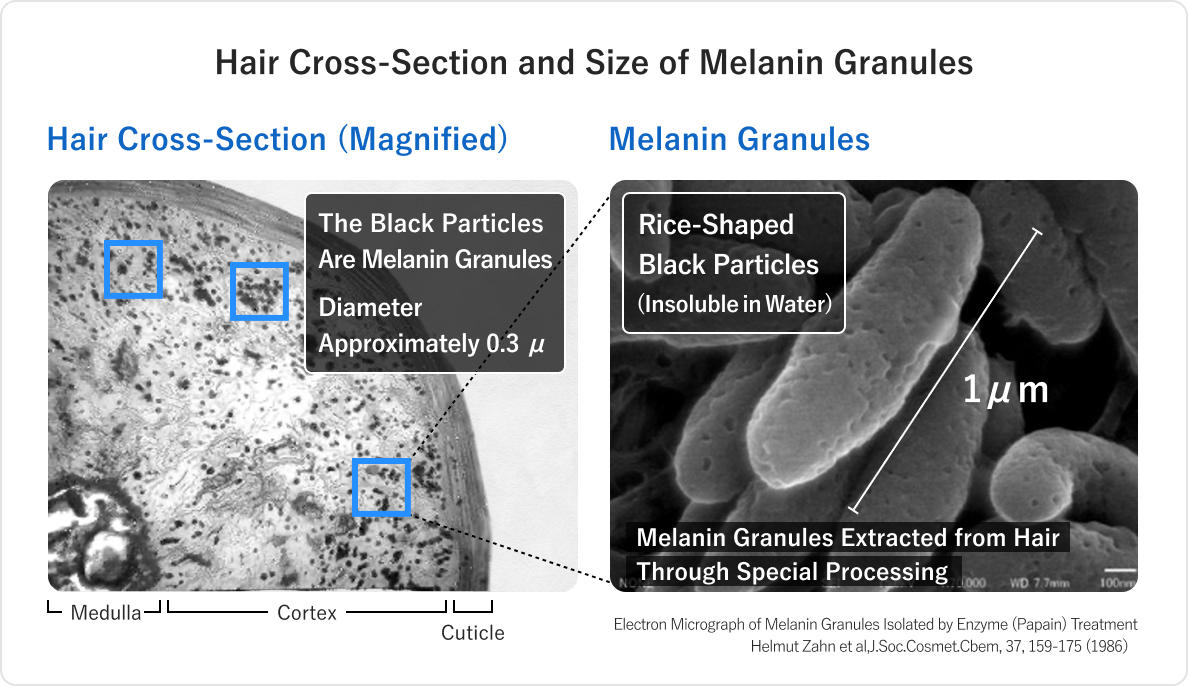
However, adding melanin to hair faces a major hurdle: melanin doesn't dissolve in water, and its particles are too large. That's exactly why reproducing hair's natural color has long been considered a difficult challenge.
On the other hand, melanin's water-insolubility and large particle size also mean this: if we can get melanin to deposit in hair, it won't easily dissolve out or wash out, and the color can be made to last.
In other words, melanin's properties—if we can master them—are the very key to achieving high functionality.
COLUMN 01
Once It Turns Black, Melanin Precursor Can't Penetrate into the Cuticle! What Made Development So Difficult?
- Air Contact Strictly Forbidden! Shield, Enclose, Seal Tight: A Lab at War with Air
-

Kao Corporation
Hair Care Research Laboratories · Senior Researcher · Ayako ShimazuMelanin precursor has a property of turning black the instant it's exposed to air. Once it has turned black, melanin precursor can no longer penetrate into the cuticle, so it can no longer color the hair. For this reason, melanin precursor must be kept from contact with air—from the raw material stage, through to the finished product, all the way to the moment the customer uses it. The experiments and prototype creation in the product development process also called for the utmost care.
For example, when prototyping products formulated with melanin precursor in the laboratory, the work is done inside a sealed box called a glove box. As the name suggests, the box has gloves attached. We fill its interior with nitrogen, keep oxygen concentration below 0.01%, and carefully mix the cream with the melanin precursor.
Through thick gloves, we hold tiny droppers to measure on the scale, and transfer liquids from beakers to containers. This was extremely awkward and demanding work.Even with the air conditioning on, we sometimes have our hands inside this box for over an hour during experiments, and in summer we end up drenched in sweat. At the start of an experiment, we first place the necessary raw materials and apparatus inside the box, fill it with nitrogen, and begin only once oxygen concentration reaches the prescribed level. But if we accidentally forget to include something, we have to open the box and start all over again—a tragedy.
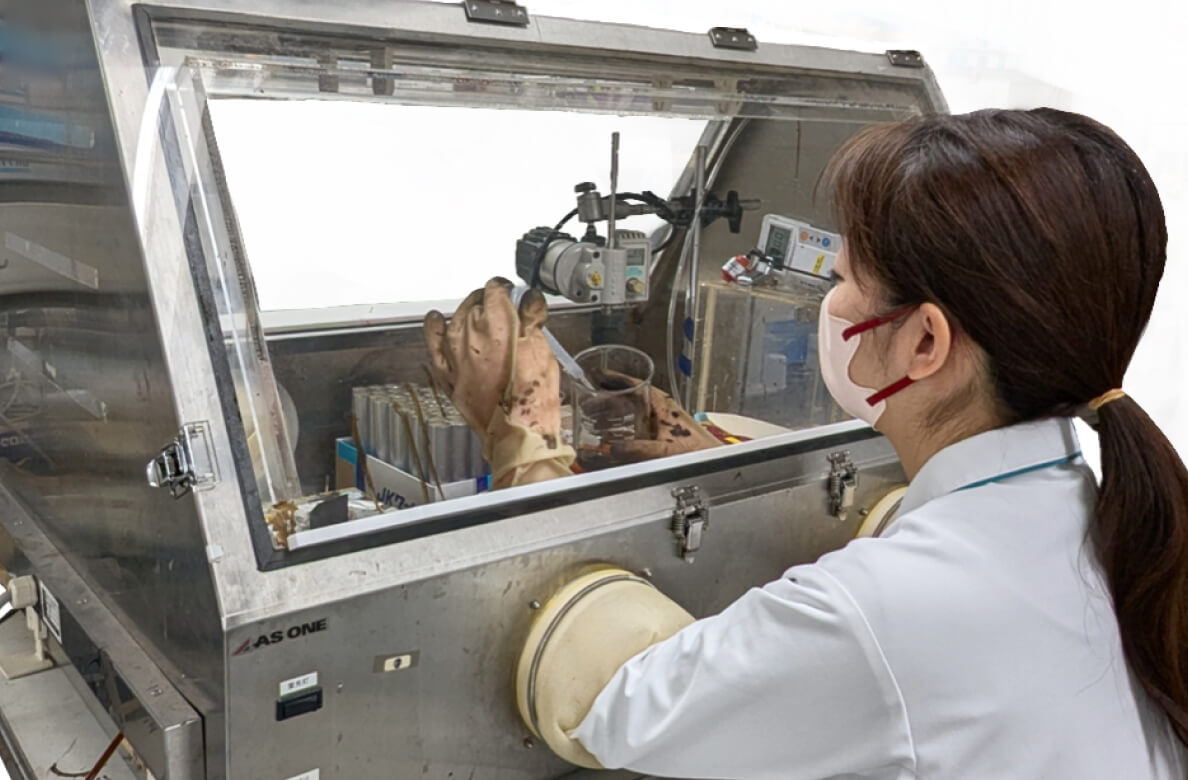
Glove Box
Note: Reproduction and secondary use permitted with proper source attribution.
The Development Key Behind Naturally Derived "Melanin Precursor"
Making Melanin Smaller
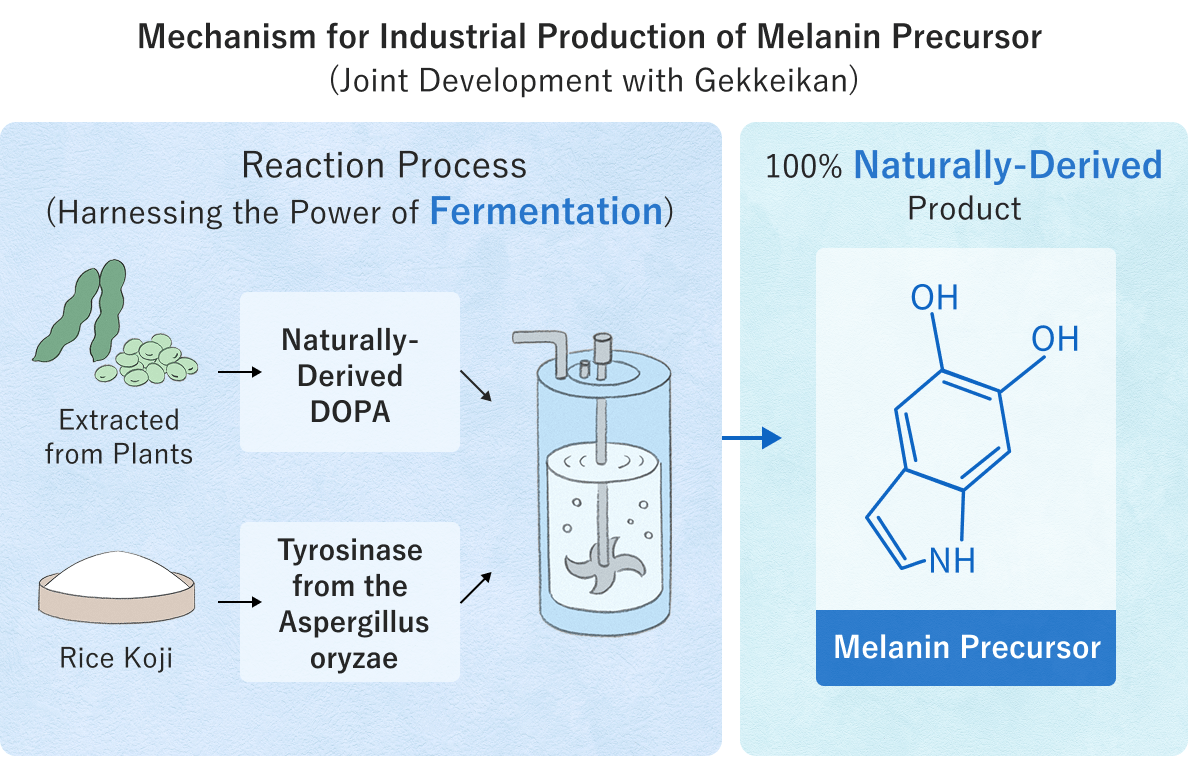
If we could create melanin smaller than the original melanin pigment, we could deliver it into the hair... Based on this idea, in the course of ongoing research, Kao turned its attention to "melanin precursor (DHI technology)."
This technology applies tyrosinase derived from the Aspergillus oryzae fungus (koji mold) to naturally derived DOPA extracted from plants, producing 5,6-dihydroxyindole (DHI)—the precursor of melanin—and enabling its stable supply. Born from the fusion of melanin research and fermentation technology, it has become the foundation of a new approach to gray hair care.
Note: Reproduction and secondary use permitted with proper source attribution.
The results of the joint research between Kao and Gekkeikan have been published in the following papers:
Koike, K., & Hata, Y. (2010). Development of naturally derived melanin precursors and their application to a convenient hair-dyeing technology. Fragrance Journal 38(2):16–20.
Koike, K. (2011). A new hair-dyeing technology using melanin precursor. Skin & Beauty 43(1):21–27.
Nakamura, Y., Yamanaka, H., Hata, Y., Ebato, A., & Koike, K. (2012). Journal of the Society for Biotechnology, Japan 90(3):115–121.
100% Naturally Derived.
Melanin Precursor Born from the Mechanism Inspired by the Body's Natural Mechanism
The melanin that gives our hair its color is originally a pigment produced inside the body. Pigment cells called melanocytes, located at the hair root, pass melanin to the cells that produce hair, giving rise to natural hair colors like black or brown.
What Kao focused on was this very "mechanism by which hair color arises." In the body, a compound called DOPA—a type of amino acid—is oxidized by the action of the enzyme tyrosinase, eventually transforming into melanin.
Inspired by this process, Kao and Gekkeikan applied the power of fermentation to create melanin precursor through the same mechanism as in the body.
Natural plant-derived DOPA is acted on by tyrosinase derived from the Aspergillus oryzae fungus (koji mold) to produce the precursor of melanin (DHI / dihydroxyindole). The melanin precursor is produced through naturally occurring enzymatic reactions, without chemical synthesis—in other words, melanin precursor is composed entirely of "100% naturally derived" components.
COLUMN 02
- "Melanin Precursor": Hair-Dyeing Technology Born from the Fusion of Different Industries
-
In the sake industry, the phenomenon of black spots appearing on sake lees—called black sake lees (kurokasu)—had long been a problem. Active research into the cause of this phenomenon eventually revealed that "melanin" was involved in the black spots.
The traditional sake brewer Gekkeikan, through its investigation of kurokasu, discovered that the enzyme tyrosinase—produced by the rice koji mold, Aspergillus oryzae—was the cause.Meanwhile, Kao had been pursuing the idea—"Could we dye hair with melanin?"—researching hair-dyeing technology that used a compound serving as the source of melanin. Taking note of Gekkeikan's findings, Kao recognized the potential for application to gray hair care and launched full-scale joint development in 2001. As a result, Gekkeikan succeeded in establishing a technology for the stable, industrial production of DHI (dihydroxyindole), a constituent component of melanin. Kao, in turn, developed both a hair-dyeing method and a hair-dyeing technology that used that DHI.
And so two fields that had never originally crossed paths—"hair-dyeing" and "brewing"—came together, giving rise to a new hair-dyeing technology that reproduces natural color without damaging the hair.
Gekkeikan
Note: Reproduction and secondary use permitted with proper source attribution.
Long-Lasting Color, Body and Resilience: Made Possible by "Melanin Precursor" Deposition
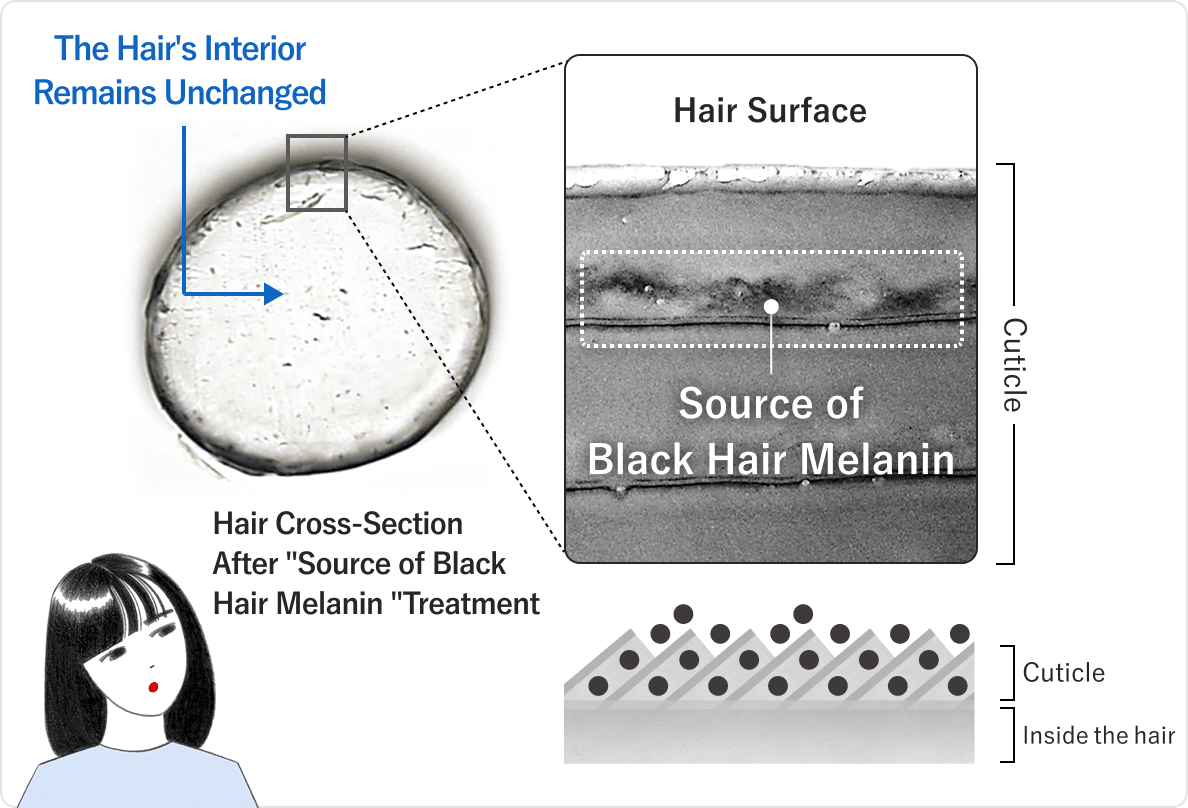
Melanin precursor firmly deposits inside the cuticle layers on the surface of the hair.
Many of the dyes used in color treatments wash out in rinsing water, with color easily fading. By contrast, with the melanin precursor, its components bond with each other, forming larger structures inside the cuticle that don't easily dissolve in water. As a result, even with repeated washing, the color doesn't easily come off—resulting in long-lasting color.
What's more, with melanin precursor depositing to the cuticle, hair elasticity increases,
and body and resilience emerge in each strand of hair.
Hair gradually becomes both supple and strong even as it's being colored…
That's the secret behind the natural body and shine that "melanin precursor" brings.
Note: Reproduction and secondary use permitted with proper source attribution.
See the Difference in How Long the Color Lasts (Video)
With Melanin Precursor
With a Color Treatment Using Direct Dyes
Other TOPIC
For benefits made possible precisely because it's an ingredient born of melanin research—including "natural hair color" and "no restrictions on regular hair color, just like uncolored hair"—please see the link below.
Other TOPIC

To see what kinds of benefits this offers in gray hair coloring scenarios, please read, "The Idea of Caring for Gray Hair with the Pigment Component Naturally Found in Hair. 'Source of Black Hair Melanin' Delivers Thorough Coloring and Long-Lasting Color."