
*Image for illustrative purposes only. Reproduction and reuse permitted with source attribution.
H-Linx TECH: The First Seven Days After Coloring
An Early Care Approach for Long-Lasting Hair Color and Hair Feel
It’s the First Seven Days That Make All the Difference—For Keeping the “Just-Out-of-the-Salon” Look & Feel
Right after hair coloring, your hair looks vibrant and full of shine, with a smooth finish. But how long can that just-out-of-the-salon look really last? In reality, it’s not so easy to maintain.
You know coloring can put some stress on your hair. But right after coloring, you love how it looks—your roots blend in, and your hair feels smooth and looks beautiful.
Even with proper care, the color gradually fades, and over time your hair can become drier, frizzier, and a little harder to manage.
Before you realize it, your hair starts to feel less stable, and that just-out-of-the-salon look gradually begins to fade.
It’s this “transition phase” after coloring that inspired the development of H-Linx TECH—an early-care approach designed to stay one step ahead.
INDEX
The First Seven Days After Coloring: The Gradual Changes During the Transition Phase
The Satisfaction Right After Coloring—and What Comes After
In a consumer survey conducted by Kao, many respondents report that right after coloring, their hair color looked vibrant and their hair appeared smoother and shinier. At the same time, many still express concern about damage.
But in reality, that just-out-of-the-salon look doesn‘t last long. Many respondents find that after each wash, and within just a few days to around a week, the ends become drier and frizzier.
Over time, the color continues to fade, and as a yellowish tone starts to appear, it makes the hair look even rougher and more damaged. This trend was also observed in the research. The question is: what causes these changes?
A New Discovery: Understanding the Transition Phase—How Hair Damage Progresses During the First Seven Days After Coloring
After coloring, dryness and difficulty managing the hair often appear after some time. To better understand what causes these changes, Kao continued its research and arrived at a key insight: the common assumption that hair damage occurs mostly during the coloring process does not fully explain what happens afterward.
This led to a new understanding that damage, long thought to occur mainly during the coloring process, continues to progress within the hair even after coloring.
Over time, these ongoing changes within the hair accumulate and eventually appear as dryness, frizz, and a loss of manageability around a week later.
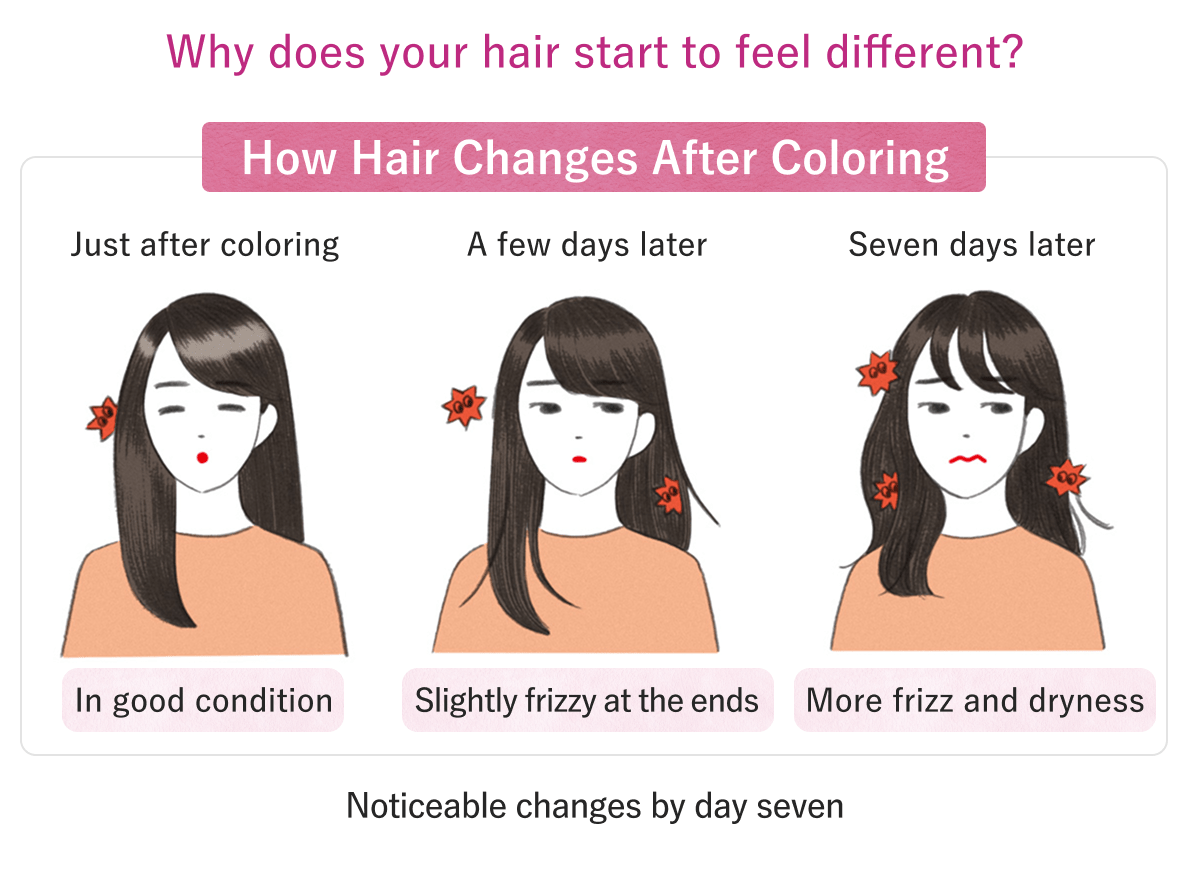
*Image for illustrative purposes only. Reproduction and reuse permitted with source attribution.
COLUMN 01
- Beyond Beautiful Color: Where Kao’s Hair Color Research Begins
-

Toshio Ogawa
Senior Principal Research Scientist, Hair Beauty Products Research, Kao CorporationIn our hair-color research, we always come back to the same question: “Is this hair color truly good for end-users?” That’s a question that lies at the core of Kao’s research.
Our hair-care research journey began in 1921. Over the past century, we have built a foundation in understanding hair structure, advancing damage care research, and analyzing hair to better understand the actual state of hair.
Despite this long history, we entered the hair-color market only about forty years ago, making us a relatively recent entrant to the industry.That’s why we took a broader approach to home hair color—developing products that end-users can use comfortably, with confidence and consistently beautiful results at home.
Hair color can give you beautiful shades, but it can also place stress on the hair—as well as involve time, effort, and the inconvenience of coloring at home. We believe home hair color should be something end-users can enjoy with confidence and comfort, without unnecessary stress. That wish has been the starting point of our research.With the launch of “Kao Hair Color” in 1985, we introduced a low-alkali formula designed to be gentler on the hair.
Since then, we have continued to develop technologies that fit into end-users’ everyday lives—such as hair manicure formulas that help minimize damage, foam-type formulas that make it easier to apply color evenly even to the back of the head, and technologies that work with the hair’s natural melanin.At first glance, these may not seem like particularly striking technologies. But behind them is a continuous effort to answer a simple yet important question: what challenges do end-users face, and how can hair coloring be made more comfortable at home? That research is supported by the results of 180,000 hair assessments, along with years of damage care research and deep expertise in formulation.
H-Linx TECH is also an extension of this line of research. It reflects our focus not only on the immediate results of coloring, but also on what happens in the days that follow. We see this longer-term perspective as an important part of our approach to hair-color research.
H-Linx TECH: Understanding the Transition Phase to Enhance Hair Beauty
Knowing How Damage Occurs Is the First Step Toward Maintaining the Beauty of Color-Treated Hair
Hair-color damage progresses quietly inside the hair not only during the coloring process itself, but also over the seven days that follow, before it becomes visible on the surface. At this stage, these changes are not yet clearly felt as damage—the hair remains in a fluctuating, unsettled state.
This “transition phase” is a period in which changes in color and texture overlap, leaving hair more prone to damage.
These changes begin in the protein bonds within the hair, which help maintain its structure. During coloring and in the days that follow, these bonds gradually weaken, even if nothing looks different on the surface. As these changes accumulate, they begin to appear as signs such as dryness and roughness.
It is this transition phase that needs to be understood seven days after coloring.
Caring for hair during this transition period in the right way helps maintain color and support the appearance and feel of the hair over time.
H-Linx TECH was developed from this idea.
Built on a deep understanding of these internal changes, H-Linx TECH helps create the conditions for longer-lasting color, with smoother, more manageable hair.

Other TOPIC
If you'd like to learn more about the “transition phase”, its underlying mechanism, and the research behind it, please visit our Ingredients & Hair Science section.
Early Care—Staying One Step Ahead After Coloring for Beautiful Hair
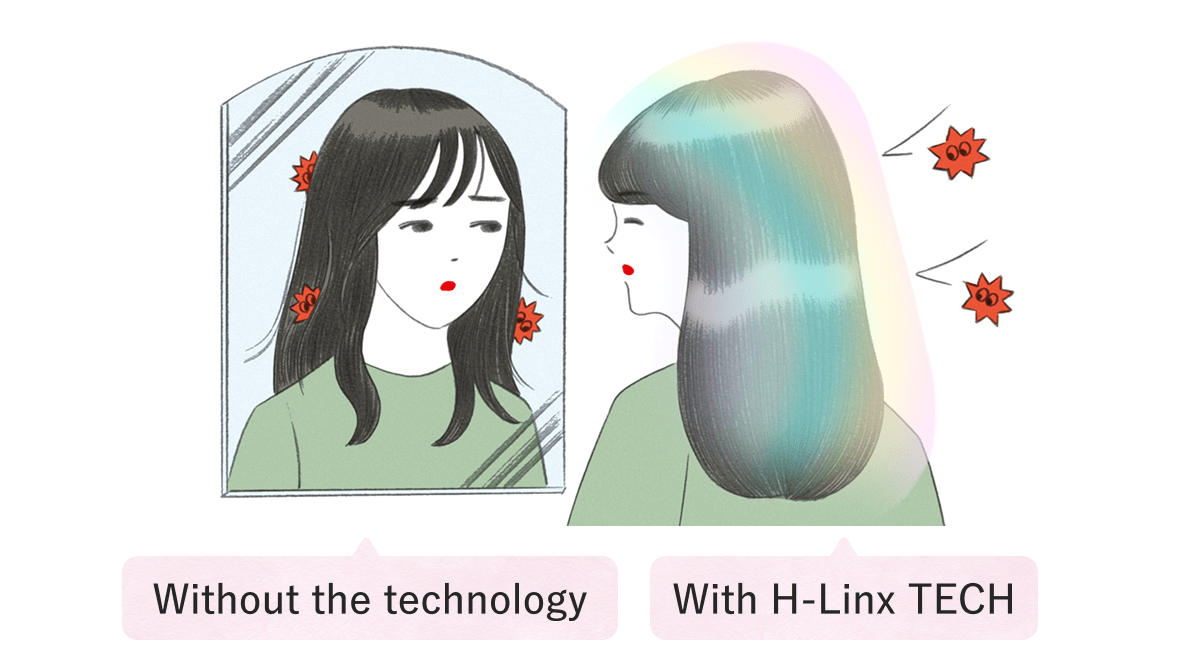
*Image for illustrative purposes only. Reproduction and reuse permitted with source attribution.
Damage That Develops After Coloring—Introducing Early Care as a New Technology
After coloring, damage continues to progress quietly over the days that follow—even before it becomes visible. This is why early care is so important.
There are many effective after-care products, such as hair masks and oils, that help manage visible signs of damage, including dryness and frizz.
The focus is on early hair care before visible signs of damage appear—helping create a condition in which damage is less likely to develop.
With H-Linx TECH, care begins before symptoms appear—helping to avoid the cycle of damage and follow-up care, and supporting the appearance and feel of the hair for longer after coloring.
The First Seven Days After Coloring—Why Early Care Matters
As the research progressed, Kao focused on a key point: the changes during coloring and those in the seven days afterward are not the same.
This led to the idea of delivering the right ingredients at the right time for each type of damage.
Using a treatment after coloring helps protect the hair from damage that gradually develops over the seven days that follow.
With this treatment, we achieved a technology that keeps the hair from feeling damaged and protects your hair for the future, rather than just treating symptoms after they appear.
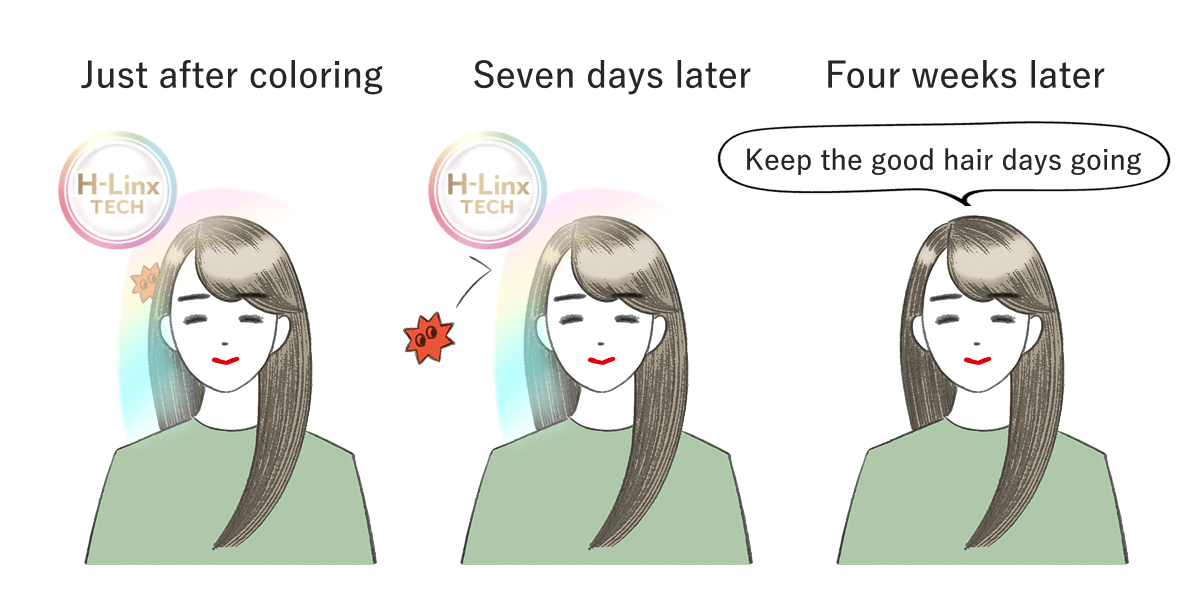
*Image for illustrative purposes only. Reproduction and reuse permitted with source attribution.
COLUMN 02
- “Early Care” for Everyday Hair Care
-
Keeping hair color looking beautiful over time starts with achieving a great result.
Rather than treating damage once it’s visible, “consistent daily care” helps keep the hair in good condition.
Right after coloring, hair looks beautiful—but it is more delicate than usual, making it more prone to escalating damage. This is why early care is especially important. H-Linx TECH focuses on this post-color unstable condition of the hair.There are many ways to help keep colored hair looking beautiful in everyday life, and consistent daily care is one of them. For example, sun protection. After coloring, hair temporarily shifts toward an alkaline state. When exposed to UV rays in this unstable condition, the protein bonds within the hair that help maintain its structure become more prone to weakening and breaking.
UV exposure is also known to accelerate color fading. Protecting colored hair from UV rays helps improve color retention and reduce damage, so it’s important to wear hats and use UV-protective items.
These small daily habits help keep your hair in good condition for as long as possible.
Other TOPIC
If you'd like to learn more about the protective approach to caring for hair before visible changes appear after hair coloring, please visit our Ingredients & Hair Science section.
Keep Colored Hair Looking Beautiful and Feeling Smooth with H-Linx TECH
Caring for Hair Before Damage Appears
H-Linx TECH is unlike conventional damage care: by focusing on early care during the transition phase after coloring, it helps create a state in which hair is less likely to feel damaged.
This means you can preserve the beautiful color and hair feel, keeping it smooth, controlled, and easy to manage—not just for the first seven days, but for long after.
With this technology, the effects of the transition phase can be better managed, helping maintain the appearance and feel of freshly colored hair for longer as the color changes more gradually and naturally over time.
There are more moments than you might think when you see yourself—not just in photos from special occasions like trips, events, or anniversaries, but in everyday life as well.
In a photo with friends, a reflection in a shop window, or the mirror each morning, there are countless moments when you see yourself—and your hair.
And in those moments, when you catch yourself thinking, “My hair actually looks really good today,” it lifts your mood and helps make the whole day feel better.
That feeling can give you more confidence, make you want to get out and see people, and bring a more positive energy to your day. H-Linx TECH is designed to support more of those moments in your everyday life.
Other TOPIC
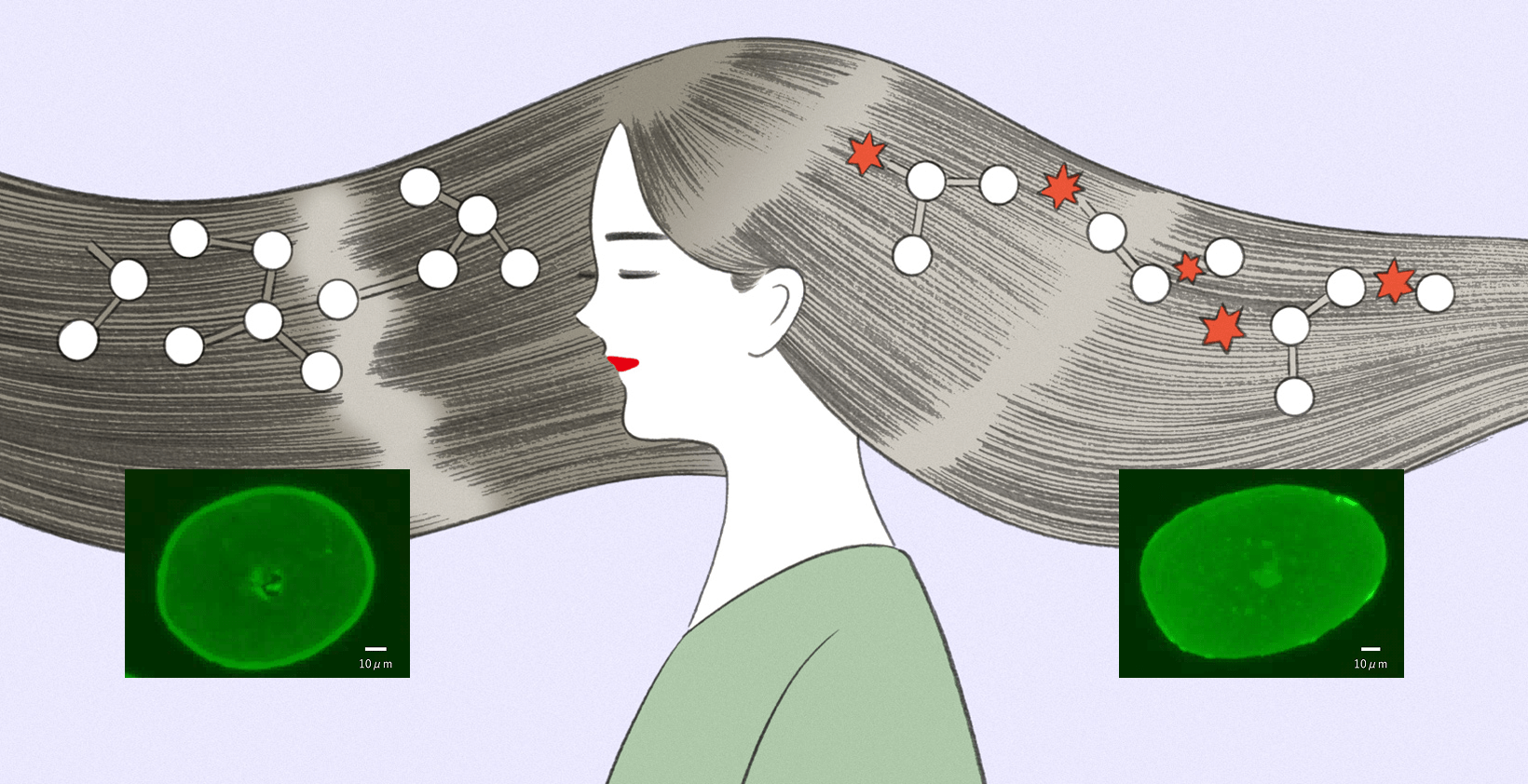
If you would like to learn more about H-Linx TECH and how it helps keep colored hair looking and feeling beautiful for longer, please visit our Lifestyle & Beauty section: “New Discovery: Damage Continues to Progress Within the Hair Even After Hair Coloring. Delivering the Right Care as Hair Changes Over Time—For Long-Lasting Beauty”